
MCA Small Ships Navigation and Radar (‘SSNR’) – New Workboat Code 3 Version - General

MCA Small Ships Navigation and Radar course covers the use of Electronic Chart Systems using approved charts and radar. This course is mandatory for skippers and crew on vessels coded to Workboat Code 3 and for many skippers and crew operating vessels coded to the NEW ‘Sport or Pleasure Vessel Code’ (The ‘SPVC Code’ replaces MGN280). Skippers need to have a clear understanding of how to set ECDIS systems up, the risks of not understanding the workings and parameters of the systems and of how to maximise the capability of these systems. Available in Southampton and Poole this 5 day course has been optimised by us for the sub 24m market.
NEWS
This course is now available to book in Southampton as well as Poole – check out the dates page. Additional dates just for your organisation can be arranged.
WHY TRAIN WITH US?
- We operate a one-to-one ratio of simulators to students – this meets the MCA requirement for the course. More importantly more time at the ‘helm’ is what you are paying for so you can really get to grips with the skills you need to operate Workboat Code 3 compliant equipment.
- Our instructors are sub-24m specialists and understand the challenges of operating smaller craft versus large ships. Our course has been constructed to specifically meet the needs of the sub 24m market.
- We are VAT registered, meaning VAT is recoverable – unlike most maritime colleges – reducing overall costs by around 20% for most businesses.
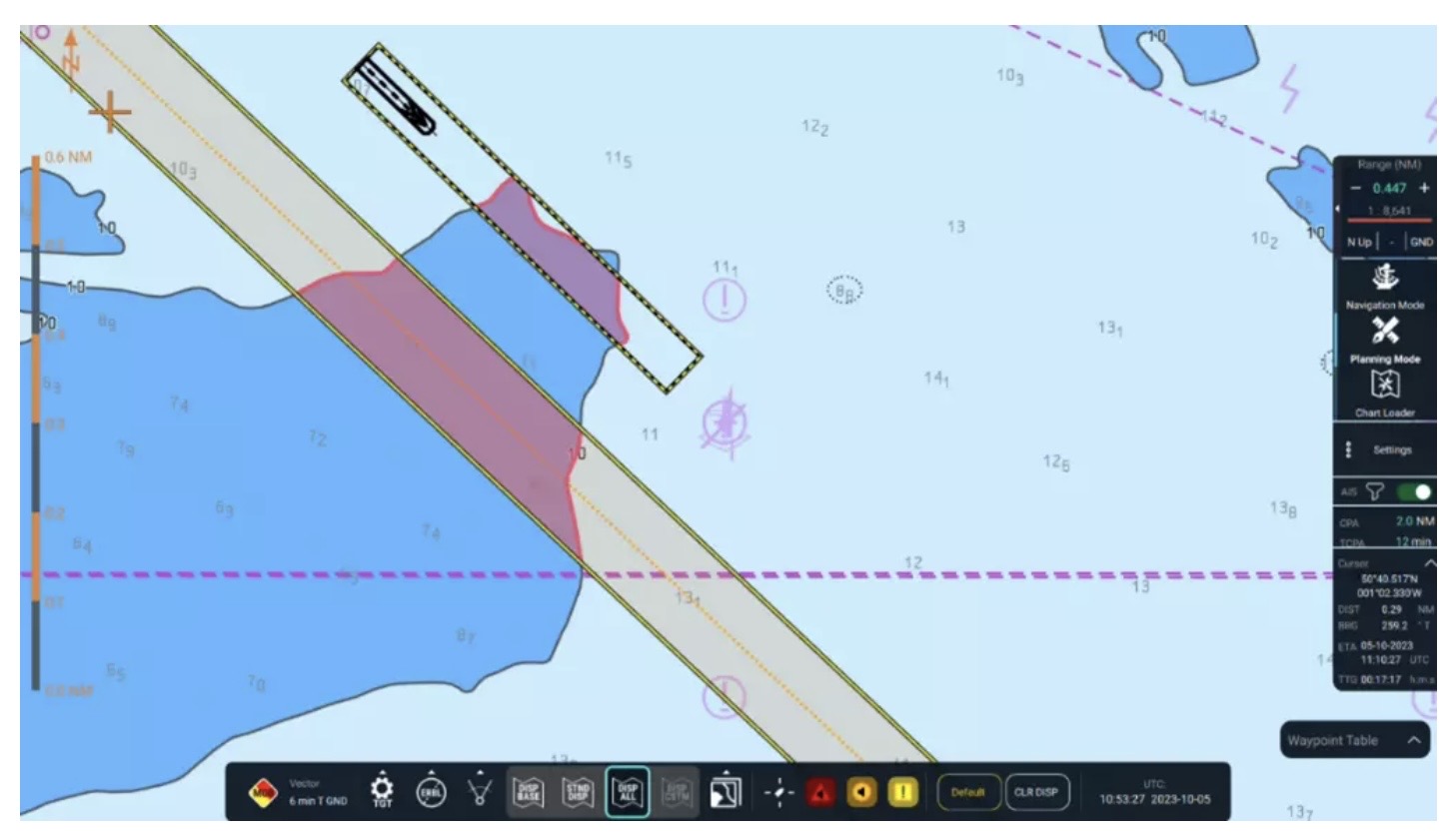
- We include the new SV-ECS standard and explain what it means for you as a skipper or navigator, including hands-on exposure to the new SV-ECS product from Raymarine Commercial using our Raymarine SV-ECS simulator.
Course Duration
5 days – The course runs from 8.30am to approximately 5/6pm. There will be a need for some work in the evenings. It’s a long course but our instructor team is very used to working with individuals arriving with varying levels of pre-existing experience and so can ensure that irrespective of your experience you massively benefit from the time invested in the course.
Instructor – student ratio
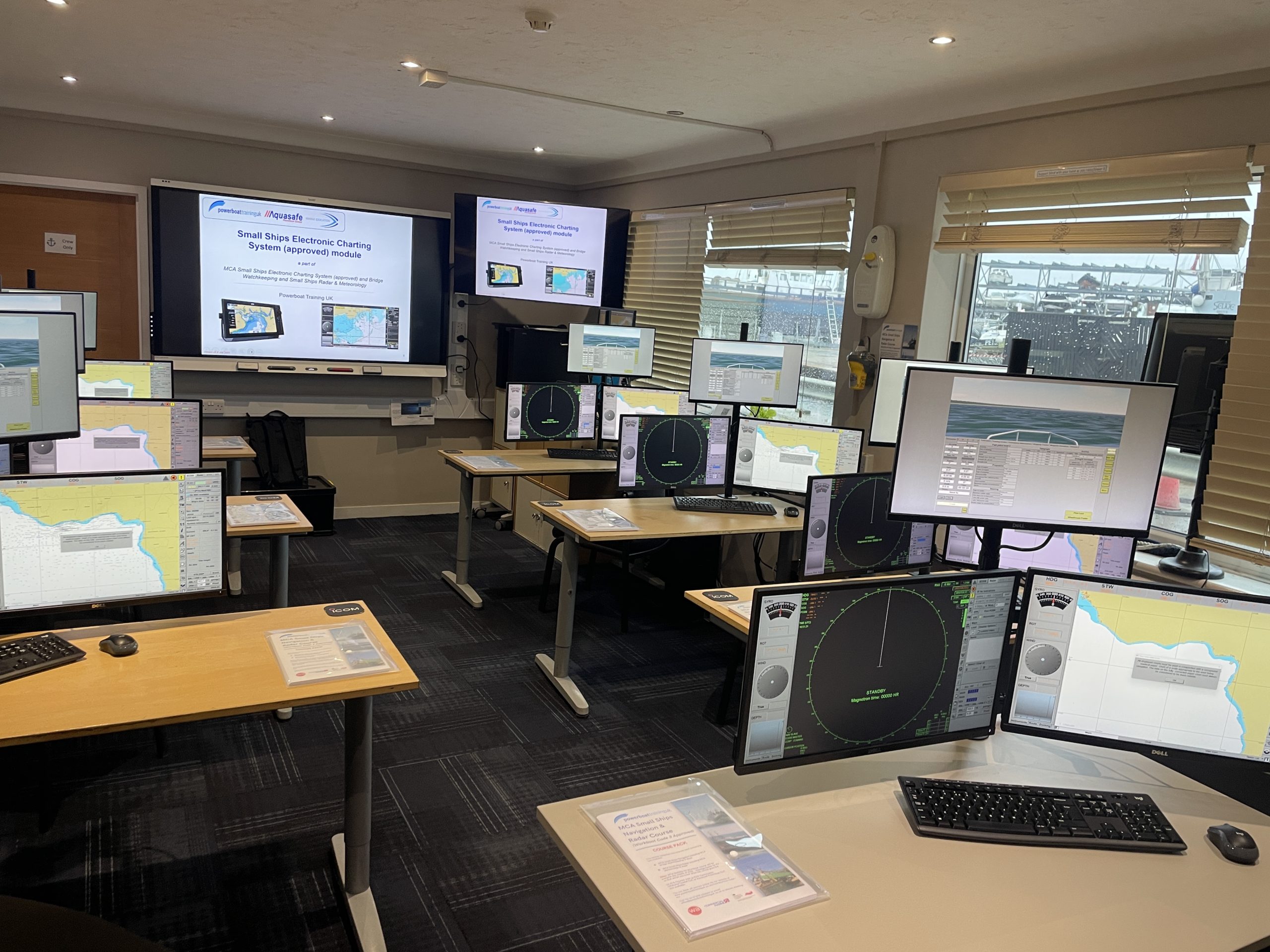
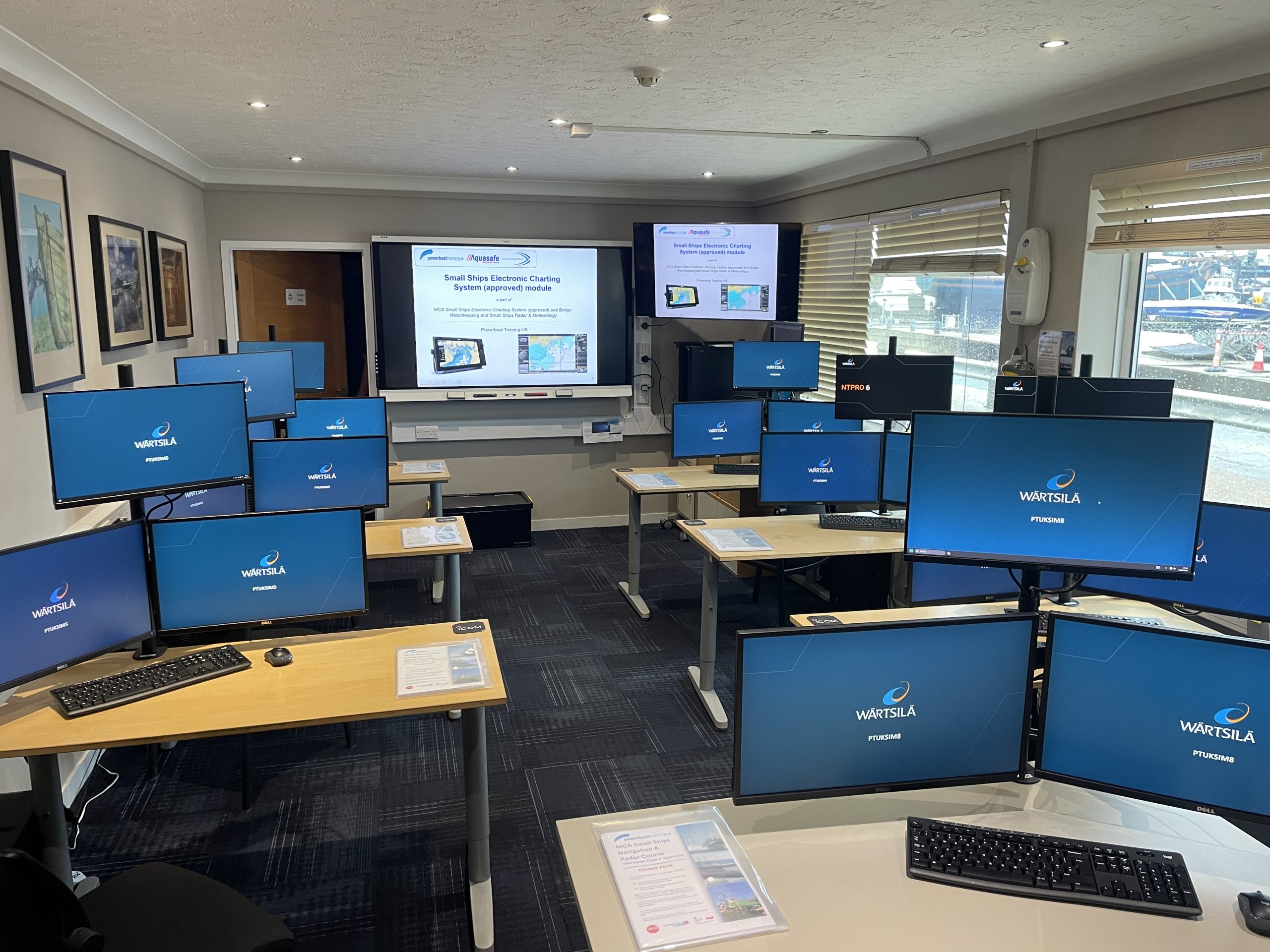
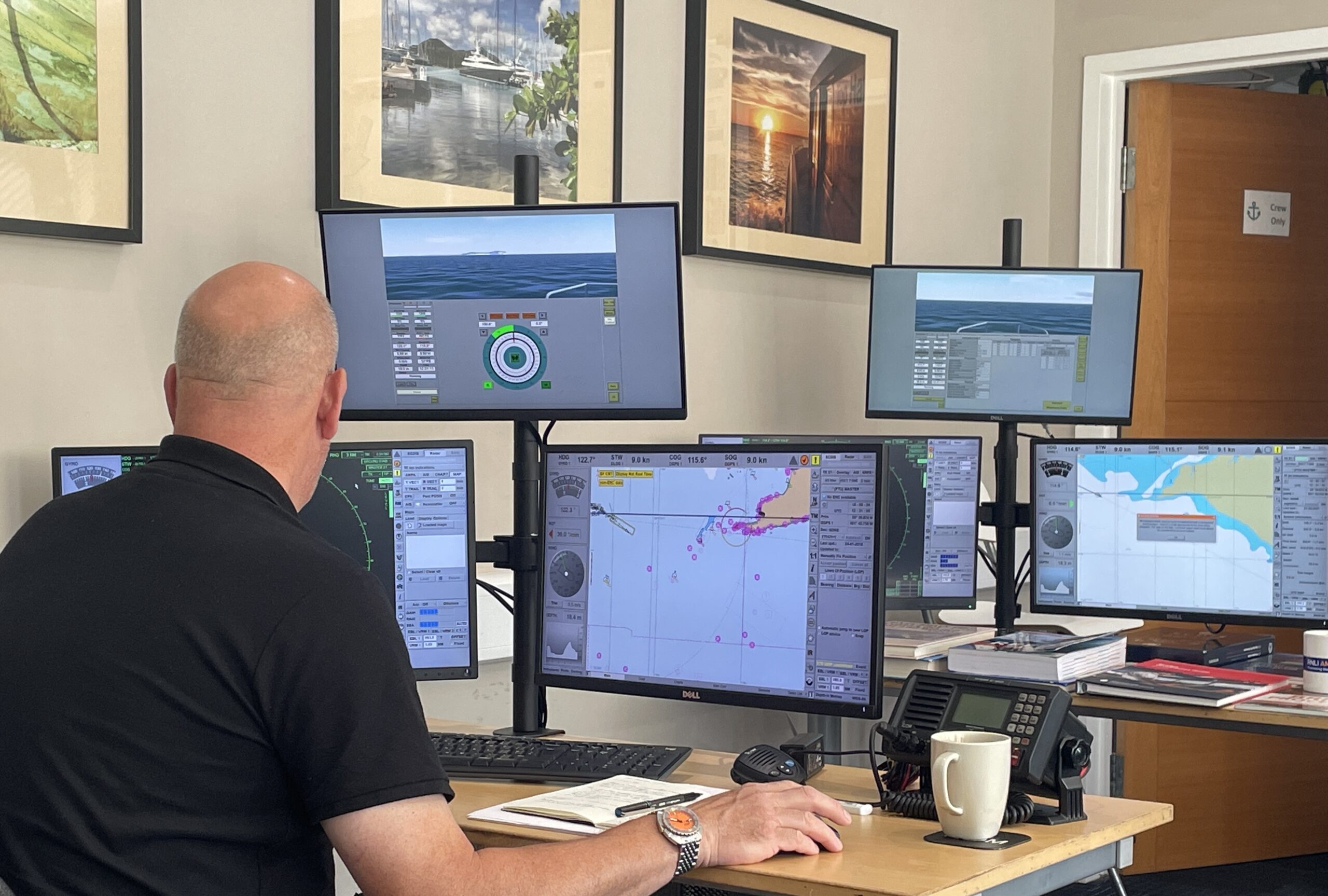
In Southampton we have 8 Stations, in Poole 6 Stations and it is a maximum of one student per station for the duration of the course. There is a Bridge Watchkeeping exercise we run where you double up on a station to enhance the training benefit of that session.
How many students per each simulator?
We run one student per each simulator station – this is the MCA requirement. Having a simulator station per student makes a real difference to your course as the real value of the training is in the practice of route planning, monitoring and dealing with the challenges making a passage presents. If there are two or even three of you at the station then inevitably your ‘at helm’ time is massively reduced and so is the value of the course. MCA Training have been very clear to us – the required ratio of student to simulator is 1:1.
What simulator do you use?
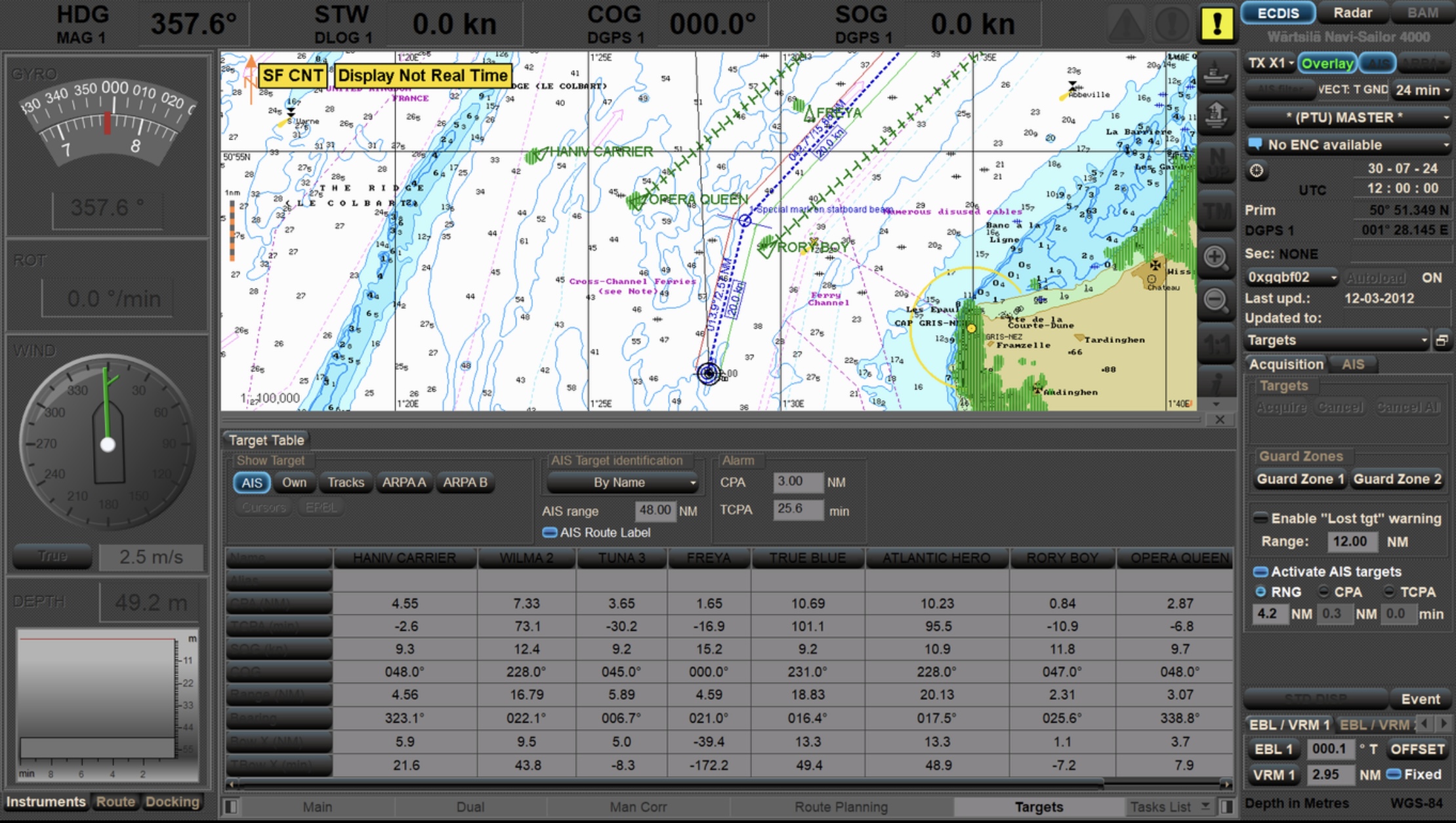
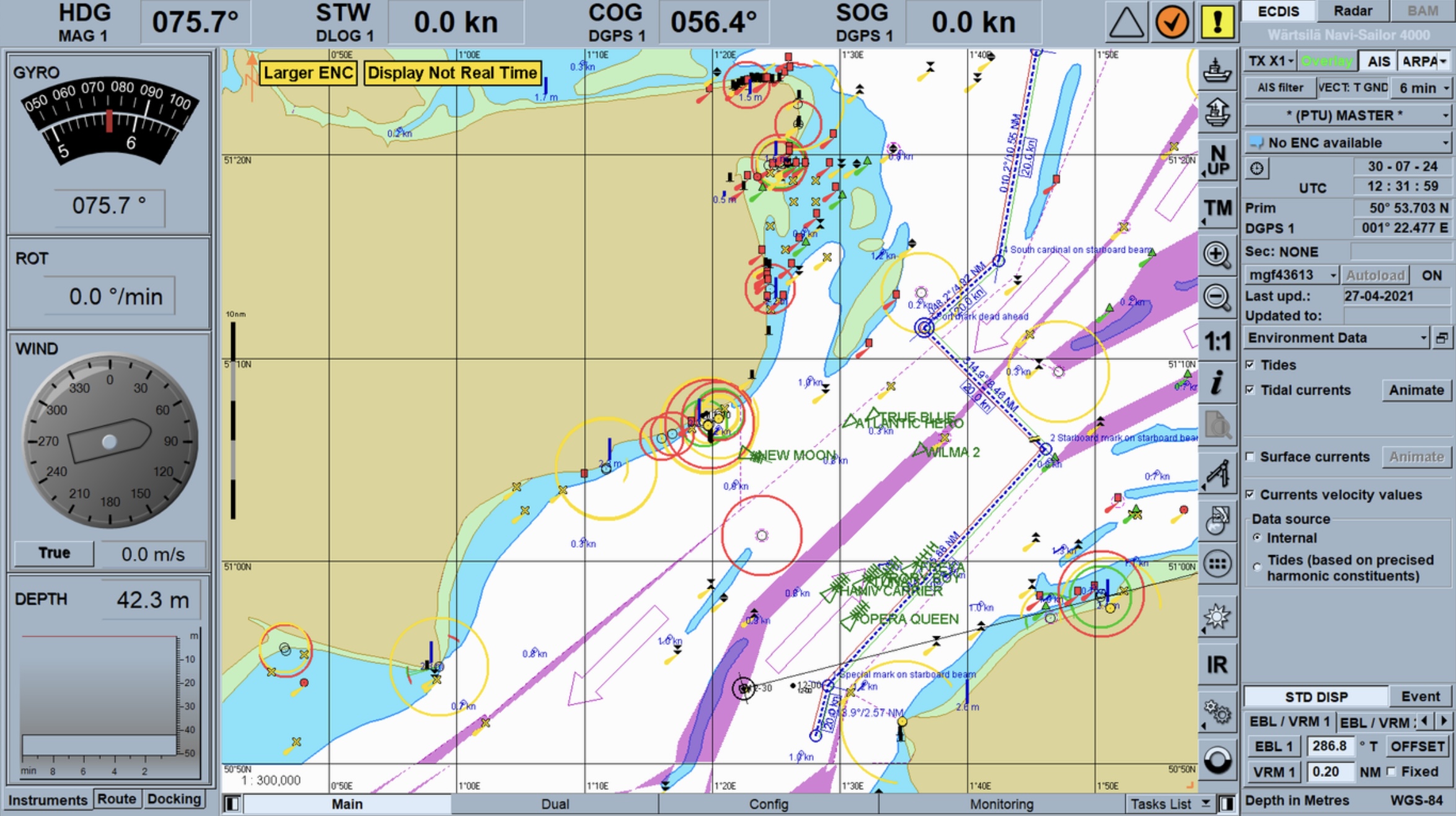
We use the Wartsila (Transas) NaviSailor ECDIS simulator. We also have a live Raymarine SV-ECS simulator that means that we can introduce you the the Raymarine solution for the SV-ECS market and show you how they are making the use of these systems within the reach of the sub 24m market.
About the course….
The MCA Smalll Ships Navigation and Radar course is actually a combination of two courses/four modules:
- MCA Small Ships Electronic Charting system (approved) and Bridge watchkeeping (3 days)
- MCA Small Ships Radar and Meteorology (2 days)
The course is aimed primarily at commercial users however it is equally relevant to non-professional users who want to get an indepth understanding of how to use their radars and electronic chart systems.
The aim of the courses are:
Electronic Charting System (approved) and Bridge Watchkeeping To give candidates the essential education and training needed to keep a safe navigational watch and to use electronic charts, and other electronic aids to perform effective Bridge Watchkeeping in small vessels.
Small Ships Radar and Meteorology To give candidates the essential education and training needed to use radar and obtaining Metrological information to maintain safety of navigation in small vessels.
Entry requirementsThe course is intended for all masters and any crew responsible for, or involved in, navigation on commercially operated small craft (<24m). It is essential for candidates to have a basic understanding of navigational principals prior to attendance. Candidates are recommended to have experience navigating small vessels and hold a level of certification that permits operations in an Area Category of Operation 6 or above.
Students shall verbally confirm on the day that they are fit and well enough to participate in the practical exercises.
You will need to bring with you a proof of ID such as driving licence or passport on day one of the course.
Why choose to undertake this course with us?
The simple answer is our approach to training this course, our instructors and our investment in equipment.
We are one of the few RYA Training Centres also recognised by the MCA as certified to run this course. As an RYA Training Centre our specialism is sub 24m craft which contrasts with the large maritime colleges, who also run this course, but have little or no experience in smaller vessels. The difference this makes to your course is huge. Our approach takes the content of the MCA course utilising an ECDIS ECS/Radar based simulator and ensures that the way the lessons and exercises are structured developed competencies in the attendees that are 110% relevant and focussed on those operating in the sub 24m sector.
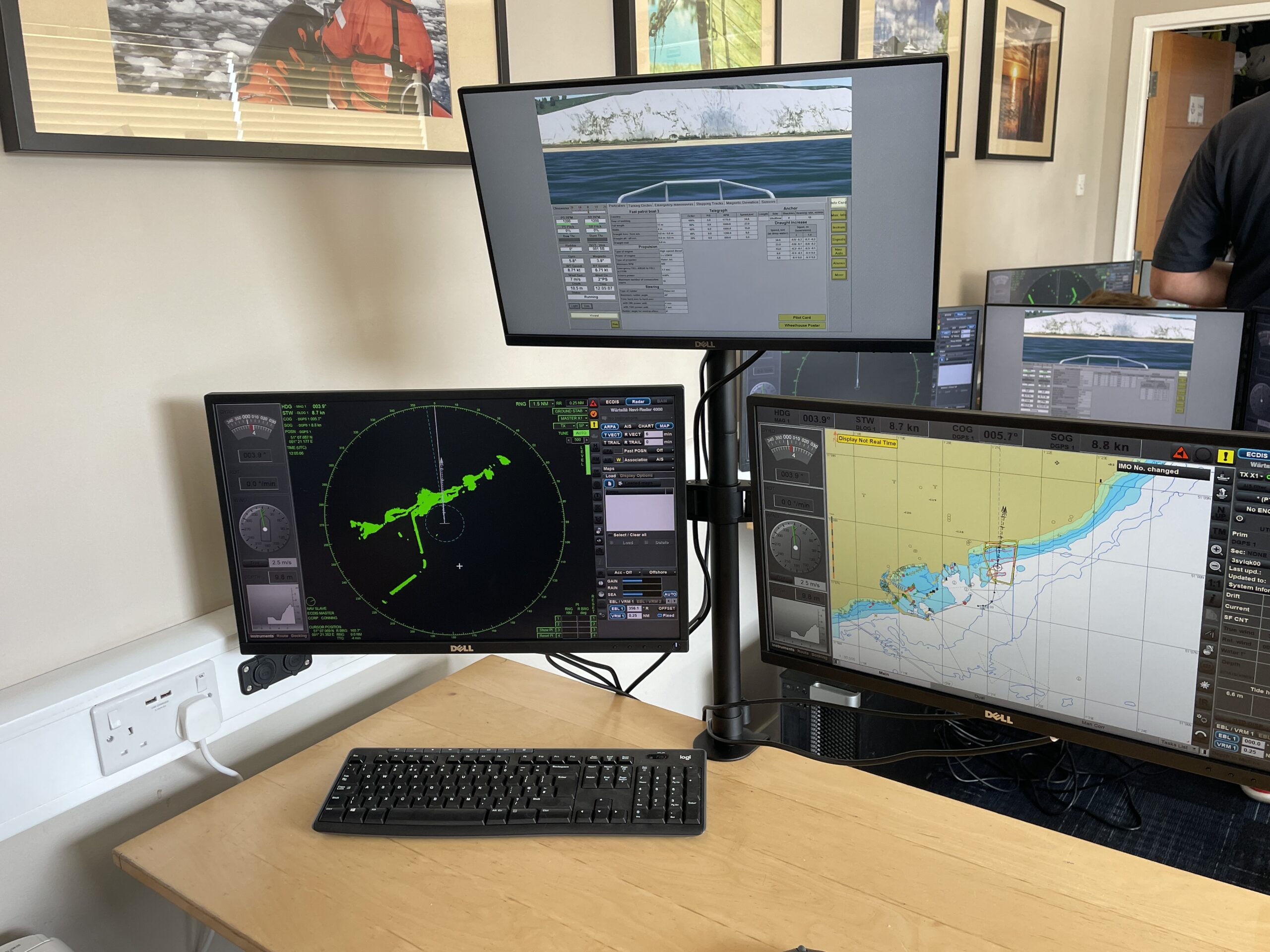
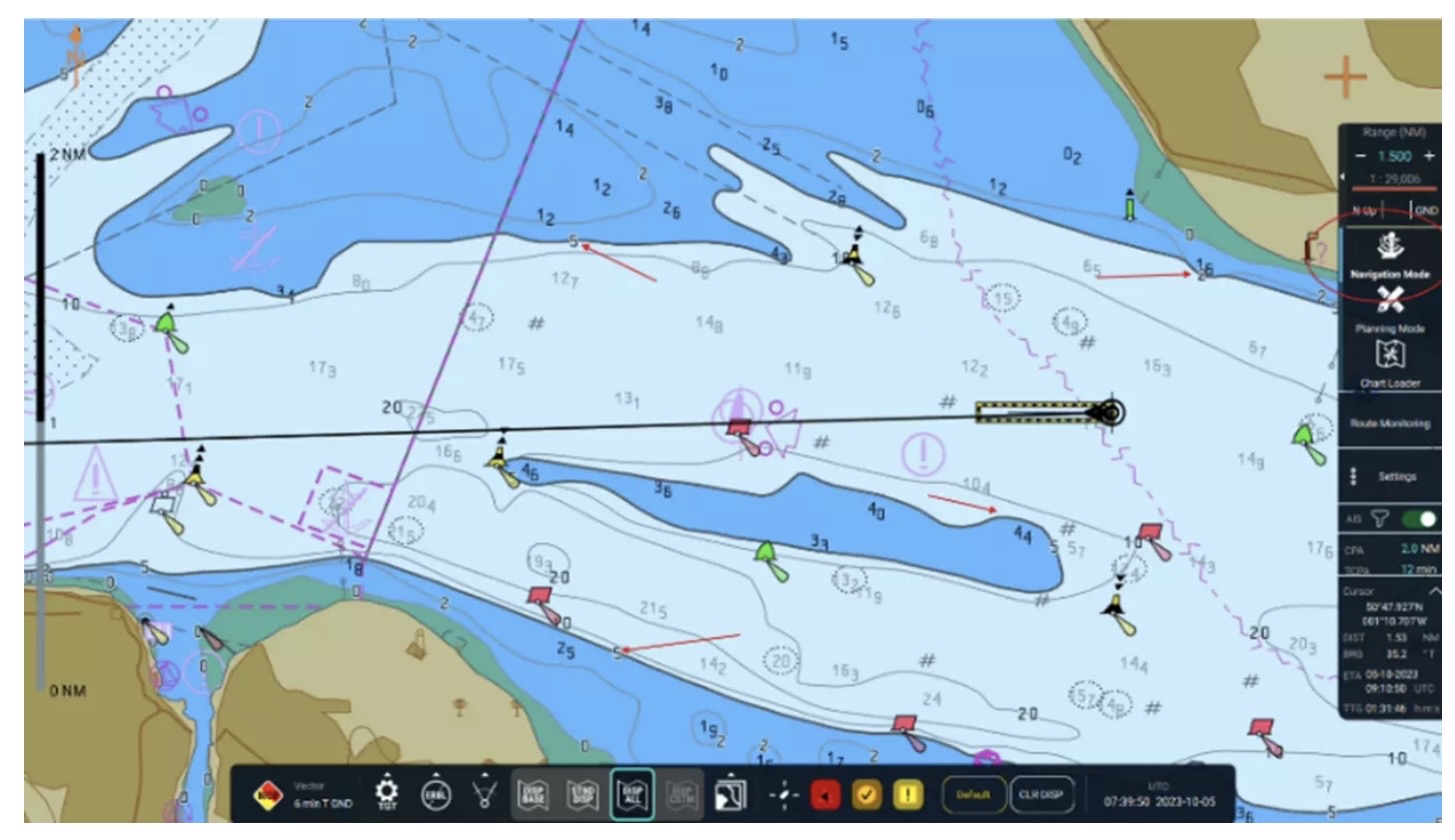
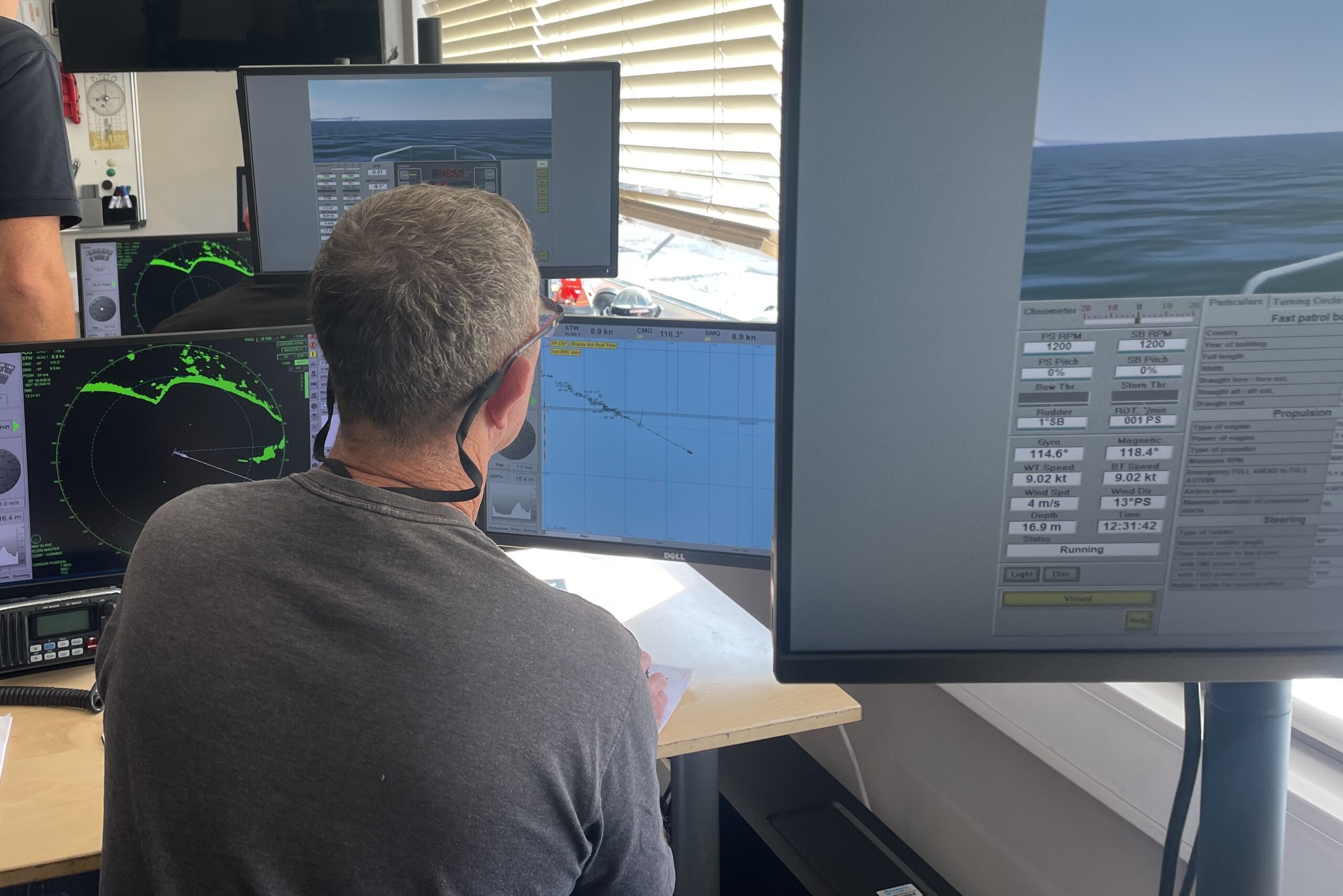
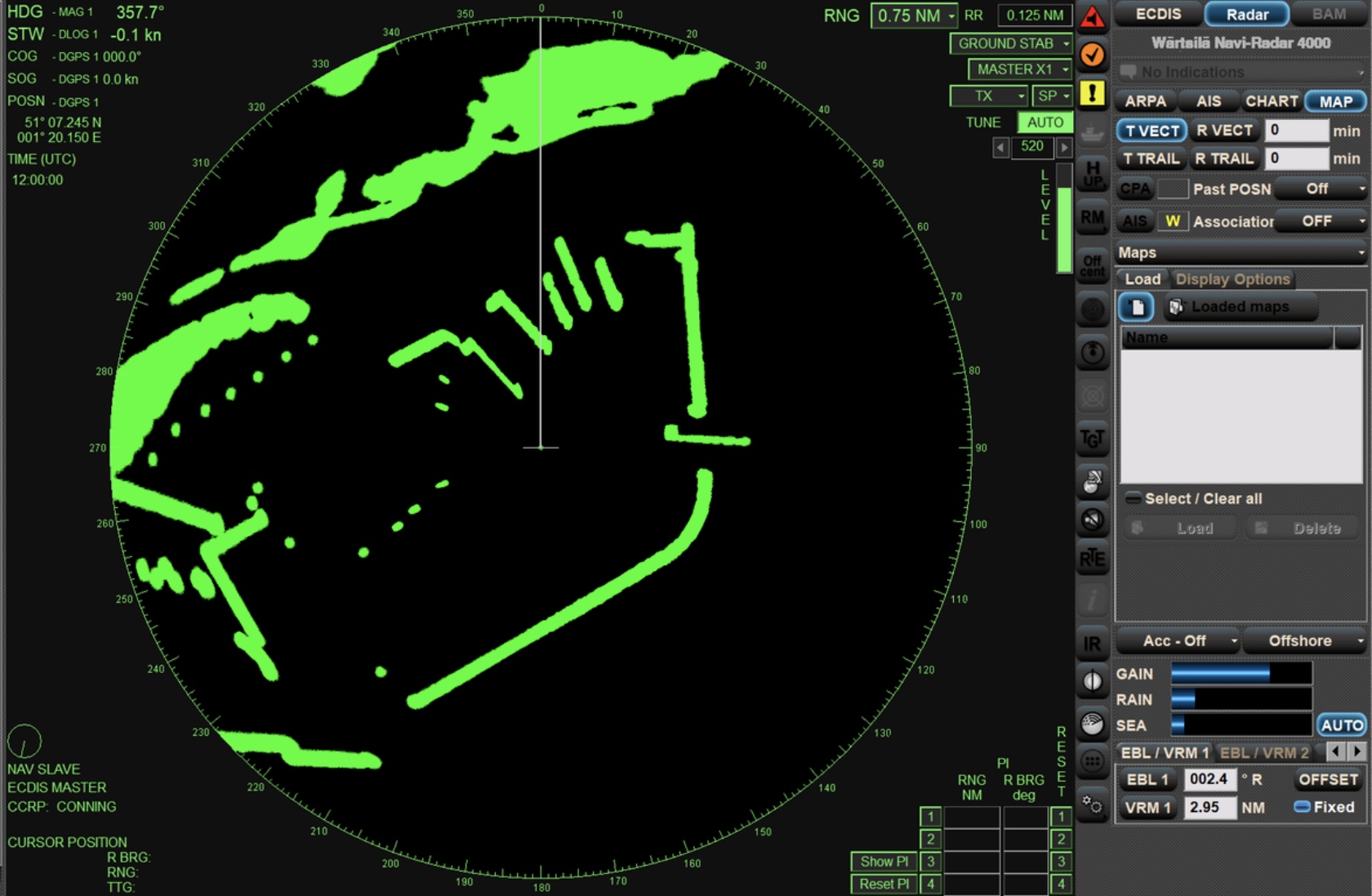
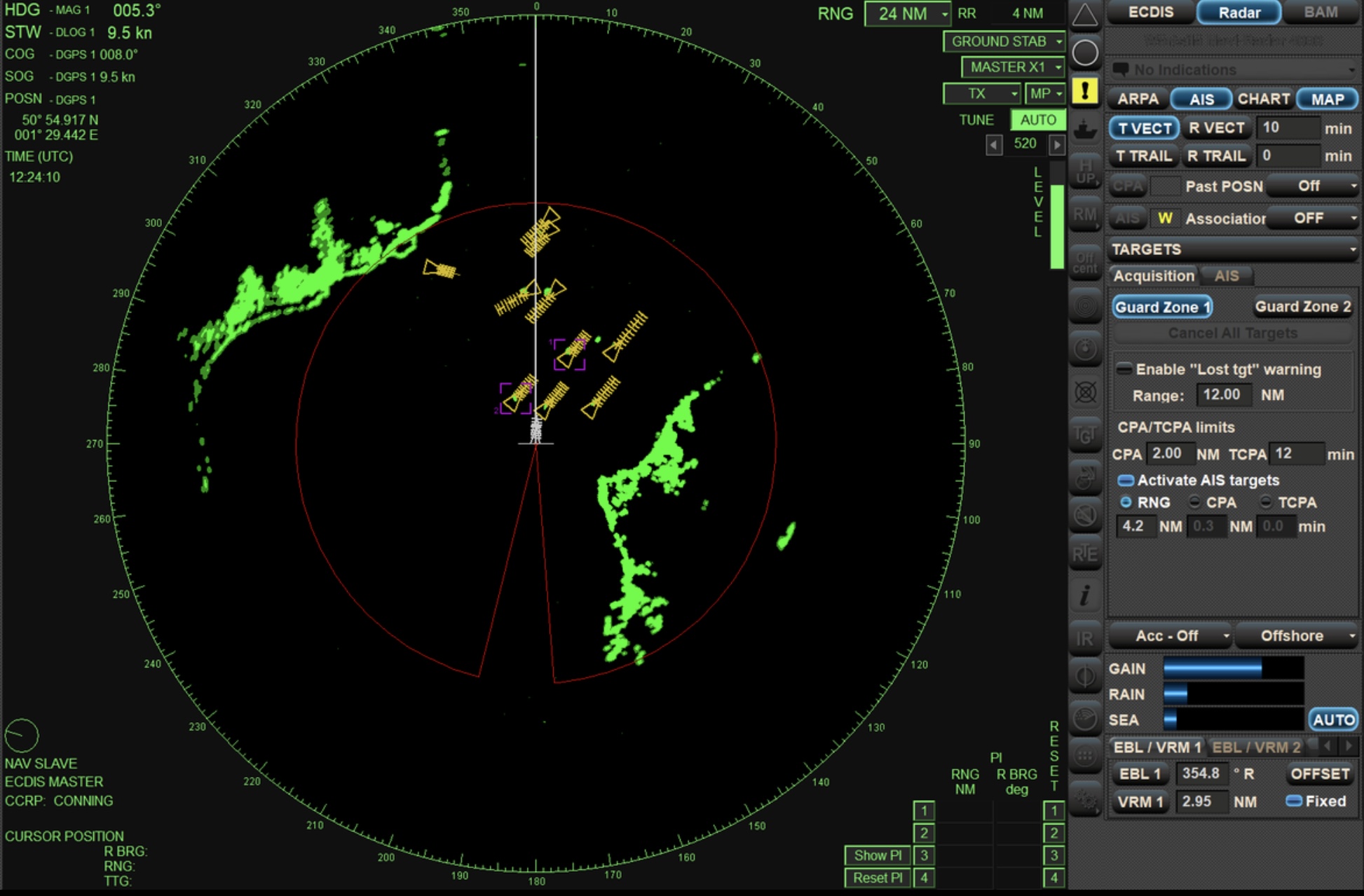
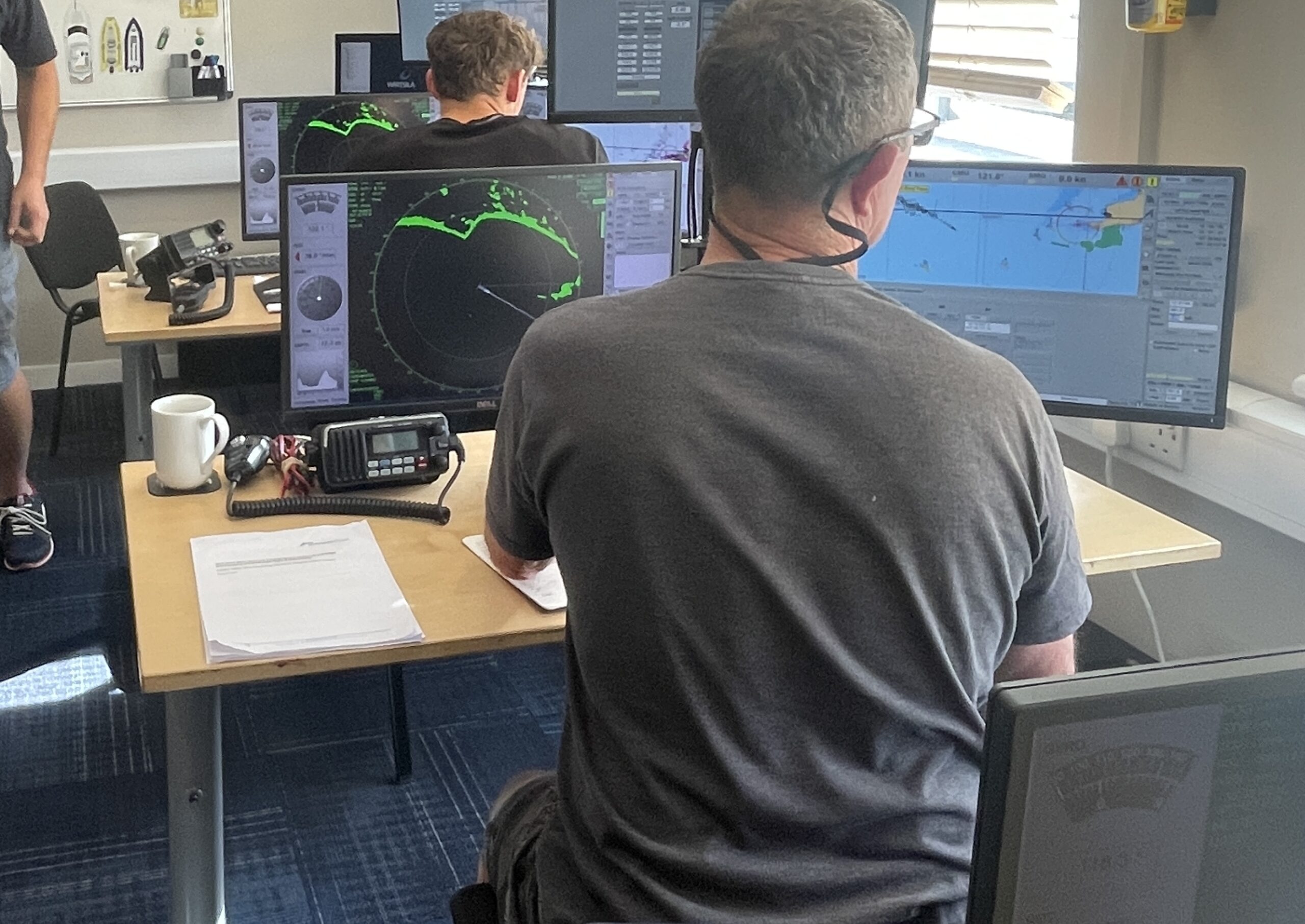
In terms of equipment we have invested heavily to ensure that we create the best training environment for this course. Our Wartsila/Transas Navi-Sailor training setup has 6x (Poole) or 8x (Southampton) student workstations (plus 1x instructor station) each running a three screen setup reflecting the typical layout on a vessel – radar display, chartplotter display and front screen/boat controls.
Our approach focuses time on using the Navi-Sailor system but also ensures that you understand the benefits and limitations of the systems in use currently on smaller boats.
We are not a maritime college teaching hundreds of individuals towards becoming big ship masters. Our expertise is the training of those who are operating with Yachtmaster Offshore/Coastal, Advanced Powerboat CoC or Master 200/500 qualifications. This difference is hugely relevant as our instructors have current, real, hands on experience of using this equipment in the ‘small ships’ market.
Our instructor’s experience of using the equipment for collision avoidance and for navigation close to shore in congested and challenging waters makes for a really beneficial and enjoyable course.
As a professional full time school our classrooms are well equipped and dedicated to the running of these courses so have all of the materials expected so that we can run first rate courses.
Finally, whilst we would not typically comment in terms of pricing being VAT registered means that our courses are often considerably more cost effective for businesses booking courses as they can recover the VAT versus maritime colleges which are typically VAT zero rated.
How do we structure and run the course?
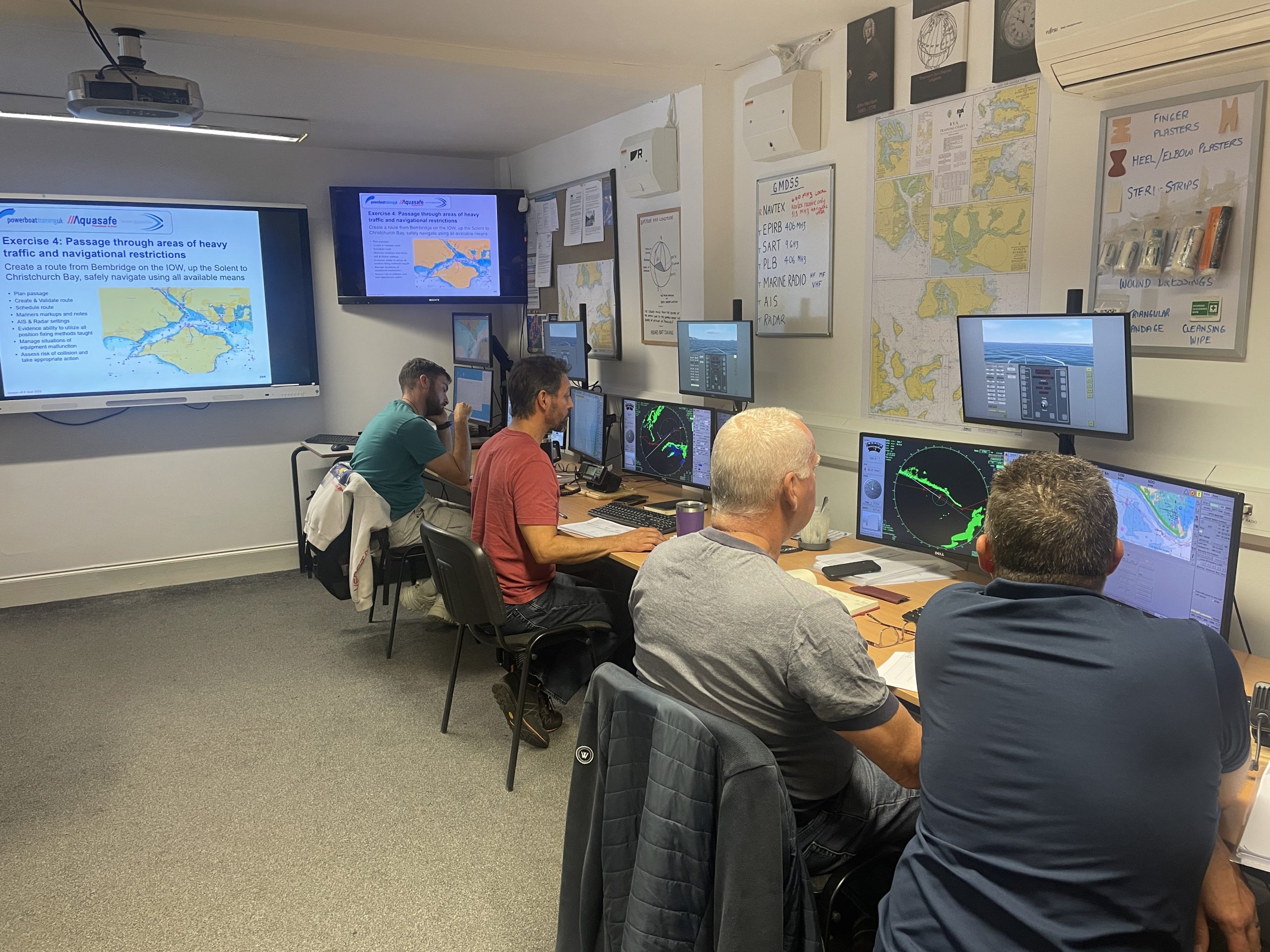
The full 5 day course is the combination of two courses and four modules. To ensure that the areas taught are fully understood and the methods learnt applied we have structured the course to consist of taught theory sessions followed by a number of simulator based exercises.
These exercises allow us to place your training vessel in a training location and then you undertake exercises based on the use of radar, or the training simulator running approved Electronic Navigation Charts or the combination of the two. Inevitably for some of the exercises we reduce the visibility and deny the vessel the use of sensors such as GNSS or Gyro/heading information.
One of the key aspects of the course is developing your understanding of the limitations of the electronic charts we are all using in our Raymarine, Garmin and Simrad type systems. By using the ECDIS simulator we can develop your understanding of the issues and work to develop better ways to navigate using the systems we are all using until more advanced systems evolve.
As you progress through the week then we ramp up the depth and the complexity of the exercises such that by the end of the week you are dealing with multiple vessels in restricted visibility in a challenging location and become at ease with dealing with the loss of sensors.
When is this course available?
Dates are listed on the ‘Book Now’ page. If you are a company and want to book team members onto the course then you can email us at office@powerboattraininguk.co.uk with their names/email addresses and we will book them on and raise a VAT invoice for the course. The invoice will need to be settled ahead of the course unless we have agreed terms with you.
If you have a number of attendees then it’s feasible we may be able to schedule a specific course to suit your team members availability. Email/call to discuss.
MCA Small Ships Navigation and Radar (‘SSNR’) – New Workboat Code 3 Version - This course is aimed at
Some examples of those that the MCA Small Ships Radar and Navigation course is best suited to include:
- Those operating as the Master/Skipper of a vessel coded under Workboat Code 3.
- Those responsible for the navigation of a vessel coded under the Workboat Code 3.
- Those operating a vessel coded under the NEW ‘Sport or Pleasure Vessel Code’ (Formerly MGN280) but also possessing a ‘Light Duty Workboat Certificate’ allowing the vessel limited operations as a Workboat.
- Those operating a vessel coded under SPVC seeking the flexibility to be able to operate as Master/Skipper of a vessel coded as a Workboat
- Those operating as the Master/Skipper of Police or Law Enforcement vessels.
- Those operating as the Master/Skipper of Pilot vessels.
- Those operating as the Master/Skipper of Military vessels.
- RYA Instructors in ashore and afloat roles keen to ensure that their understanding of radar and electronic chart systems is at the highest level.
- Leisure users keen to operate at the highest level in terms of their use of radar and electronic chart systems.
Even if you don’t fit any of the above categories then you are still most welcome to come on the course!
MCA Small Ships Navigation and Radar (‘SSNR’) – New Workboat Code 3 Version - Syllabus
The detailed course content is as follows:
Module: MCA Small Ships Electronic Charting system (approved) and Bridge watchkeeping (3 days)
The course syllabus addresses:
Module: MCA Small Ships Electronic Charting system (approved)
Charts
- Differences between vector, raster, official, and non-official charts.
- Chart ordering and updating.
- Data sources and category of zone confidence (CATZOC).
- Symbology and interrogating chart features (pick reports).
Electronic Charting Systems
- Key types (approved/non-approved) and associated standards/regulations.
- Required inputs and outputs including and sensor setup.
Device setup
- Chart loading and selection (scales).
- Orientation, zoom levels, base, standard and custom displays, vectors/trails.
- Overlays, to include ARPA and Automatic Identification Systems (AIS).
Safety settings
- Safety depth/contour calculations.
- Contours and safety depth settings.
- Anti-grounding.
- Alarms and indications.
- Man-overboard functions.
Position monitoring
- Methods of position fixing and application to electronic charting systems.
- Monitoring global navigation satellite systems (GNSS) integrity, verification of position and datums.
- Suitable actions and alternate fixing methods in situations of GNSS denial.
Tides
- Tidal calculations using digital means.
- Using tidal calculations with electronic charts and routes.
Routes
- Requirement for route planning.
- Route planning, validation, and editing.
- Route monitoring.
Module: MCA Bridge Watchkeeping
- Set up procedures for global navigation satellite systems and navigational aids other than those previously referred to.
- Operational limitations and errors in the use of bridge equipment.
- Echo sounder use including operational misunderstandings and use of warning limits.
- Use of relevant M Notices and Bridge Procedures Guide (BPG).
- Use of radio communication equipment.
- Use of Automatic Identification Systems (AIS). Including: i) Different system types and performance characteristics. ii) Any limitations, benefits, and the reliability of data. iii) The use of AIS when complying with the Convention on the International Regulations for Preventing Collisions at Sea, 1972.
- Sources of navigation warning data.
- Passage plan development including the use of all relevant publications.
- Compass errors, and corrections.
- Effective monitoring of courses by hand steering or autopilot.
- Watchkeeper briefing and handover procedures.
- Bridge record keeping.
Module: MCA Small Ships Radar and Meteorology (2 days)
The course syllabus addresses:
Module: MCA Small Ships Radar
- Types of Radar and differences in use.
- Using Radar as a ranging device.
- Use and limitations of radar for bearing measurement.
- Effect of horizontal bandwidth, particularly on land targets.
- Use of Sea and ground stabilised modes of operation
- Display set up procedures including the use of performance monitoring facilities.
- Understanding of the heading marker and its alignment.
- Sea and rain clutter settings.
- Relative and true motion displays.
- True and relative trails and vectors.
- Head-up (unstabilised) and North-up (stabilised) displays.
- Shadow sectors and blind arcs.
- False echoes.
- Plotting as an aid to collision avoidance.
- Position fixing and radar navigation.
- Use of parallel indexing techniques.
- Semi-automatic and automatic plotters.
- Errors associated with automatic plotting aids.
Module: MCA Meteorology
- How to obtain weather information.
- Use of weather reports in relation to a proposed passage plan.
- Actions upon encountering reduced visibility.
- An appreciation of voyage limitations imposed by reduced visibility.
- Possible effect of wind on tracks made good.
- The effect of wind on tides and tidal streams.
- Local weather anomalies.
- Effect on sensors/equipment of weather.
MCA Small Ships Navigation and Radar (‘SSNR’) – New Workboat Code 3 Version - Gallery





MCA Small Ships Navigation and Radar (‘SSNR’) – New Workboat Code 3 Version - Book Now
Thank you for your interest in this course.
Hopefully the dates that we have scheduled work well with your availability. If the dates don’t quite work then we are always keen to be as flexible as possible so please contact us and we’ll see what we can do.
We’re always really keen to chat to you when you’re booking a course as whilst we are happy to take bookings through this system for your convenience – nothing beats chatting about boats and courses!
Don’t forget too that if you are an individual or company/organisation booking a few people onto courses then we may be able to schedule dates around you. Equally, for bookings some time in the future we can usually juggle our course dates if what we have scheduled doesn’t quite work for you.
Note: Our Southampton based courses are booked to run at Aboard Boat Coaching at Universal Marina in the Hamble. Address Unit 22-23, Universal Marina, Crableck Lane, Sarisbury Green, Southampton SO31 7ZN
Booking codes: SSNR means the full 5 day course, SSN means you are booking the MCA Small Ships Navigation & Bridge Watchkeeping course (excluding Small Ships Radar) and finally SSR means the 2 day MCA Small Ships Radar and Meteorology course.
| Date | Course | Duration | Location | Availability | |
|---|---|---|---|---|---|
| Mon 09 Feb 2026 | SSNR | 5 days | Southampton | Fully booked | |
| Mon 23 Feb 2026 | SSNR | 5 days | Southampton | 1 space | Book now |
| Mon 09 Mar 2026 | SSNR | 5 days | Poole | 6 spaces | Book now |
| Mon 16 Mar 2026 | SSNR | 5 days | Poole | Fully booked | |
| Mon 20 Apr 2026 | SSNR | 5 days | Southampton | 7 spaces | Book now |
| Mon 18 May 2026 | SSNR | 5 days | Poole | 6 spaces | Book now |
| Mon 15 Jun 2026 | SSNR | 5 days | Southampton | 5 spaces | Book now |
| Mon 13 Jul 2026 | SSNR | 5 days | Poole | 6 spaces | Book now |
| Mon 10 Aug 2026 | SSNR | 5 days | Southampton | 8 spaces | Book now |
| Mon 14 Sep 2026 | SSNR | 5 days | Poole | 6 spaces | Book now |
| Mon 12 Oct 2026 | SSNR | 5 days | Southampton | 8 spaces | Book now |
| Mon 16 Nov 2026 | SSNR | 5 days | Poole | 6 spaces | Book now |
| Mon 14 Dec 2026 | SSNR | 5 days | Southampton | 8 spaces | Book now |
For information… When you make a booking using this system please be aware that we allocate you the places but the booking is provisional and subject to confirmation. We will review your booking and then you will receive a payment request from us, the payment you make will secure your place. You will receive confirmation from us at the latest during the next business day. For all courses we have a minimum required number for the course to go ahead.
Also…We have an automatic cutoff built into this system that doesn’t allow you to book within 48 hours of the course starting. We may still have places though – use the contact button to alert us to your interest.
And finally…Once you have finished the process you will receive a variety of emails. If you do not get any then please check your spam folder and if there is nothing there then please let us know.
